Why Ultra-Tight Tolerances in CNC Semiconductor Parts Define Equipment Performance
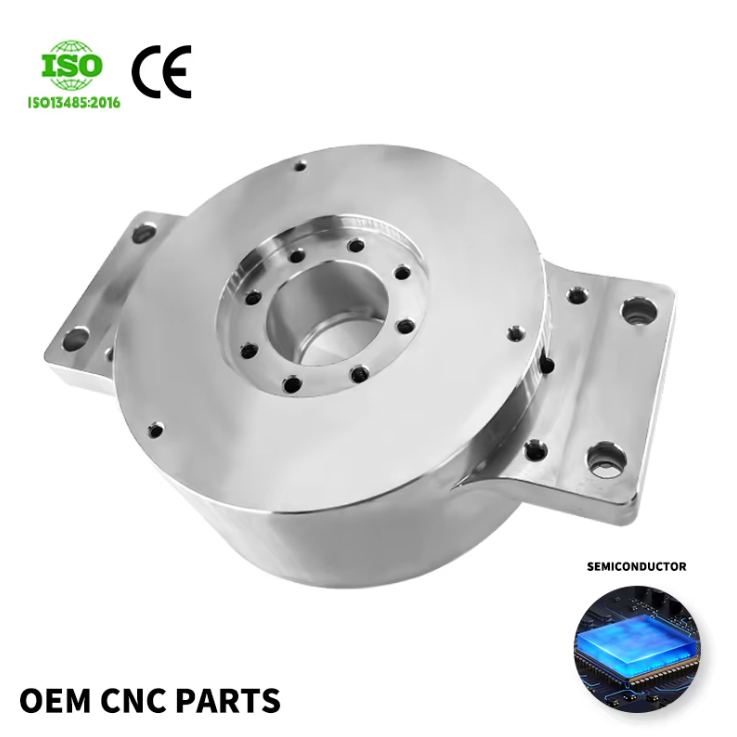
When engineers discuss CNC Semiconductor Parts, they are talking about components where the margin for dimensional error is measured not in millimeters or even tenths of a millimeter, but in microns — and where the consequences of a part that falls outside specification are potentially catastrophic. A wafer stage component that is out of tolerance by just a few microns can cause lithographic overlay errors that render entire wafer lots unsaleable, representing losses of hundreds of thousands of dollars in a single production run. This context makes the precision machining of semiconductor equipment components one of the most exacting and highest-value segments in the entire machining industry.
Understanding why tolerances in semiconductor equipment are so tight requires an appreciation of the process physics involved. In photolithography — the patterning process at the heart of chip manufacturing — current-generation tools pattern features at dimensions of 3–5 nm. Achieving this requires the wafer to be positioned with nanometer-level accuracy, which in turn requires the wafer stage mechanical components to be manufactured with sub-micron positional accuracy.
Thermal Stability: The Hidden Dimension of Precision
Dimensional accuracy at room temperature is a necessary but not sufficient condition for semiconductor equipment components. Thermal stability — the ability to maintain dimensional relationships as the component's temperature changes during operation — is equally critical. Every metal expands as its temperature rises; the challenge in precision equipment design is managing, predicting, and compensating for this thermal expansion so that it does not introduce positional errors that degrade process performance.
Aluminum's relatively high coefficient of thermal expansion (23 µm/m·°C) makes thermal management particularly important for aluminum semiconductor components. Process engineers typically address this through a combination of active thermal control, material selection (using invar or zerodur for the most thermally sensitive components), and software-based thermal compensation models that adjust stage coordinates based on measured temperatures. CNC machining suppliers who understand these thermal design requirements contribute genuine engineering value to their clients' equipment development programs.
Clean-Room Compatibility and Contamination Control
Semiconductor fabrication occurs in ultra-clean environments where airborne particle counts, molecular contamination, and outgassing from materials must be controlled to extraordinarily low levels. CNC-machined components destined for use in semiconductor fabs must be manufactured and packaged in ways that minimize contamination risk. This typically means machining in a controlled-environment machine shop, cleaning parts to semiconductor-grade specifications (ultrasonic cleaning in pharmaceutical-grade solvents, followed by deionized water rinses and nitrogen drying), individually packaging parts in cleanroom-compatible materials, and shipping under conditions that prevent thermal shock, vibration damage, or condensation.
The cleanliness protocol extends to the inspection process as well. CMMs used for semiconductor part inspection must be maintained in controlled environments, calibrated regularly against traceable standards, and operated by trained metrologists who understand the measurement uncertainty implications of every inspection setup choice. Suppliers who invest in semiconductor-grade cleanliness infrastructure differentiate themselves fundamentally from general-purpose machine shops who cannot demonstrate equivalent contamination control.
OEM Partnerships and Design Support
The most productive relationships between semiconductor equipment OEMs and their machining suppliers go well beyond standard buy-sell transactions. When a machining supplier's engineers actively participate in design reviews — identifying features that are difficult or expensive to machine, proposing tolerancing strategies that achieve functional requirements with less manufacturing risk, and suggesting material or surface treatment alternatives that improve performance — the OEM benefits from the supplier's manufacturing expertise in ways that translate directly into lower product cost and shorter development timelines.
For new semiconductor equipment programs where the design is still in flux, this collaborative design support is often where the most significant value is created. A machining supplier who reviews a complex multi-feature aluminum component and identifies that two separate parts could be combined into one by adding a machining operation (saving assembly time, reducing tolerance stack-up, and eliminating a potential leak path in a gas-handling component) delivers far more value than one who simply quotes and makes what is on the drawing without comment.
Conclusion
CNC semiconductor parts represent the absolute leading edge of what precision machining technology can achieve, and the suppliers capable of consistently producing these components at production volumes are among the most sophisticated manufacturers in the world. For semiconductor equipment developers, finding and developing long-term partnerships with these suppliers is one of the most strategically important supply chain decisions they will make — one that directly impacts their ability to compete at the frontiers of chip manufacturing technology.