How to Choose the Right Drill Bit for Concrete, Masonry, and Hard Material Projects
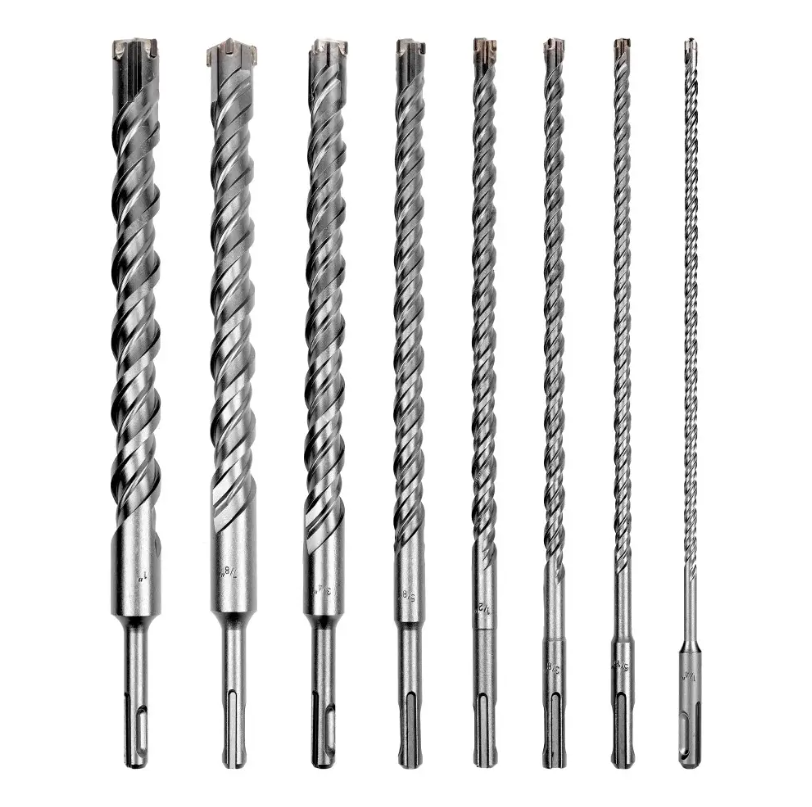
When it comes to drilling into the hardest materials that construction and renovation professionals regularly encounter — reinforced concrete, natural stone, ceramic tile, engineering brick, and hardened masonry — selecting the appropriate drill bit technology is not merely a matter of preference but a fundamental determinant of whether the project can be completed efficiently, safely, and without damaging expensive tools or the substrate itself. The SDS-Plus hammer drill bit represents the technology that has almost universally replaced conventional twist drill bits for serious concrete and masonry drilling, and understanding why — and how to select the right specification within the SDS-Plus category — is essential knowledge for any professional who regularly works with hard construction materials.
SDS-Plus (Special Direct System Plus) drill bits are designed specifically for use with rotary hammer drills in hammer drilling mode — a combination of rotation and rapid axial hammering that fractures concrete progressively as the bit rotates. Unlike conventional twist drill bits that rely entirely on rotary cutting action, the SDS-Plus bit's carbide tip is subjected to the impact of the hammer mechanism, concentrating enormous energy at the point of contact with the concrete to create a controlled fracture that the bit's helical flutes then clear from the hole. Amsuo's SDS-Plus hammer drill bit range uses premium grade carbide tips, carefully braised (not merely cemented) to the steel bit body, ensuring that the critical carbide-to-steel joint maintains its integrity through the violent mechanical environment of hammer drilling that would separate improperly bonded tips within a short operating life.
SDS-Plus Drill Bit Specifications: What the Numbers Mean
SDS-Plus drill bits are specified by diameter and working length, with the diameter range for standard construction work typically running from 4mm to 40mm and working lengths from short (for shallow anchor installations) through long (for through-wall penetrations in thick concrete) to extra-long (for deep core applications). The carbide tip geometry — in particular the number of cutting edges (2-cutter or 4-cutter designs) — affects both the penetration rate and the smoothness of the hole wall. 4-cutter designs with their additional cutting edges produce faster penetration and cleaner holes than 2-cutter equivalents in the same diameter, though at a modestly higher manufacturing cost. For professional applications where productivity and hole quality directly affect project economics, the 4-cutter specification represents excellent value. Amsuo offers both configurations across their SDS-Plus range, with clear specification documentation enabling buyers to select the appropriate cutter geometry for their specific application requirements and budget.
Glass and Tile Drill Bits: Precision Drilling Without Cracking
At the other extreme of the hard materials spectrum, drilling clean holes in glass, ceramic tile, porcelain, and natural stone without cracking or chipping the material requires a completely different drill bit technology from the impact-based SDS approach. Glass and tile bits use tungsten carbide tips with a spear-point or arrow-head geometry that cuts through the brittle material by a combination of mechanical cutting and controlled micro-fracture at the cutting edge, generating minimal lateral stress that would otherwise propagate cracks across the tile. The critical operational requirement for glass and tile drilling — regardless of bit quality — is the complete elimination of impact: these materials fracture catastrophically under the axial hammer action that makes SDS bits effective in concrete, and the drill must be operated in rotation-only mode (hammer mechanism disengaged) with light, consistent pressure throughout the hole. Amsuo's glass and tile bit range covers straight-shank designs for use in conventional drills and hex-shank designs for quick-change chuck use, with guidance on the correct operating technique, lubricant use, and pressure management that maximises success rates and bit service life in the most demanding glass and ceramic drilling applications.