How an Industry Warehouse Metal Loft Shelf Transforms Storage Capacity
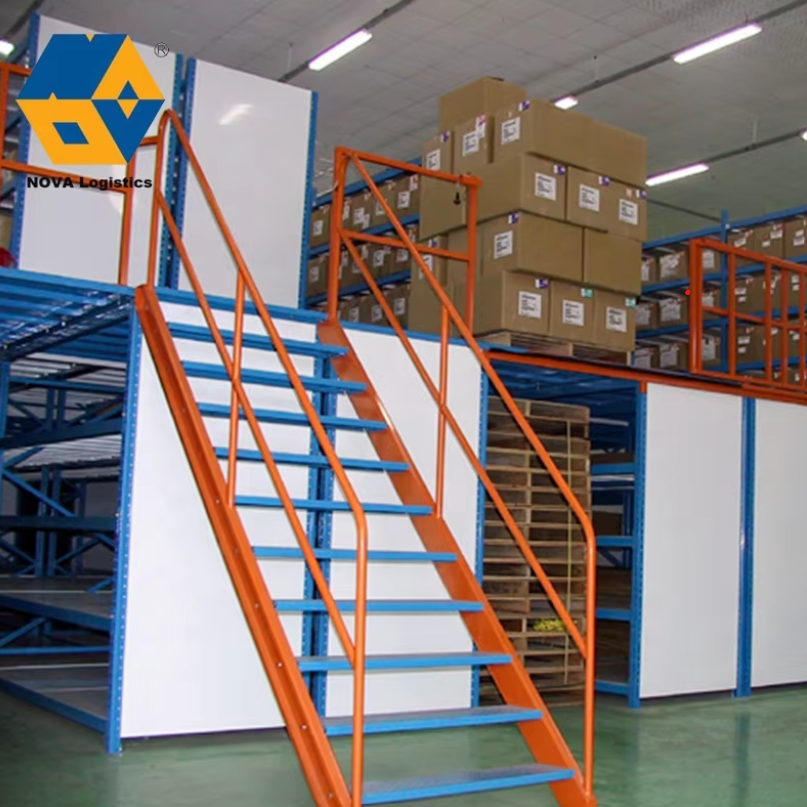
The economics of warehousing and industrial storage have never been more challenging, with property costs rising in virtually every major logistics market and the pressure to accommodate growing inventory volumes intensifying year on year, making the Industry Warehouse Metal Loft Shelf one of the most financially compelling storage investments available to facility managers today. Rather than committing to the enormous capital and operational disruption of physical building expansion — which in most established logistics markets involves planning permissions, extended construction timelines, and costs measured in millions of dollars per square metre of additional floor space — a metal loft shelf system exploits the unused vertical dimension of the existing building to create new usable storage area at a fraction of that cost and in a fraction of that time. The financial return on a well-specified mezzanine shelf system is typically rapid, with payback periods of twelve to thirty months commonplace across diverse industry applications.
The design process for an Industry Warehouse Metal Loft Shelf system begins with a detailed structural survey of the existing building, assessing the floor slab's load-bearing capacity at the proposed column positions, the available clear height between existing floor and roof or ceiling obstructions, and the locations of existing services — sprinkler heads, lighting rigs, HVAC ductwork — that will need to be accommodated or relocated to allow the mezzanine structure to be installed without conflict. This information feeds into the structural engineer's load calculations, which determine the column grid spacing, primary and secondary beam sizes, and decking specification required to achieve the target uniform distributed load rating while complying with all applicable structural design standards. The resulting detailed engineering drawings form both the manufacturing specification for the steel components and the installation guidance that the site crew follows to assemble the structure safely and correctly.
Integrating Loft Shelves with Existing Racking and Material Handling Systems
One of the most important considerations in the design of any mezzanine shelf system is how it will integrate with the existing racking systems, material handling equipment, and operational workflows already established within the facility. In many warehouse implementations, the metal loft shelf is not a standalone installation but forms part of a larger integrated storage solution — with conventional selective pallet racking or drive-in racking operating on the ground floor beneath the mezzanine, and lighter-duty shelving, carton flow racks, or pick modules occupying the elevated level above. This vertical integration of storage methods within a single structural footprint allows the facility to simultaneously optimise both pallet-level bulk storage and piece-pick operations in the same area, dramatically improving the storage intensity and operational throughput of the combined system. Conveyor systems, goods lifts, and vertical reciprocating conveyors can all be integrated into the mezzanine structure to enable efficient material flow between levels without manual carrying.
Customisation Options for Every Facility Type
No two warehouse facilities are identical in their dimensions, structural characteristics, inventory profiles, or operational workflows, and the most capable metal loft shelf manufacturers recognise this by offering comprehensive customisation of every structural and functional aspect of their systems. Column heights, bay widths, beam depths, decking types, staircase positions and configurations, handrail heights and finishes, pallet gate positions, and surface treatment specifications can all be adjusted to meet the precise requirements of each facility and application. For multi-storey installations, intermediate mezzanine levels can be added within the same column structure, maximising the vertical storage potential of buildings with generous ceiling heights. Surface treatments — typically hot-dip galvanisation for outdoor or high-humidity applications, or powder coating in a range of RAL colours for indoor commercial installations — allow the system to be specified for both its corrosion resistance and its visual integration with the broader facility environment.
Long-Term Value and Reconfigurability
Unlike permanent building extensions, a well-designed modular metal loft shelf system retains its financial value through its reconfigurability — the ability to be partially or fully dismantled, modified, and reinstalled in a new configuration or new location if the business's operational requirements change over time. This reconfigurability transforms the mezzanine system from a fixed capital expenditure item into a moveable asset that follows the business rather than constraining it. When a business relocates, the entire mezzanine system can be dismantled by a specialist crew, transported, and re-erected in the new facility with only modest modification costs — preserving the original capital investment and eliminating the need to purchase a new system for the new location. This long-term value retention, combined with the initial cost advantage over permanent construction and the speed advantage over building expansion, makes the Industry Warehouse Metal Loft Shelf one of the highest-ROI investments available in the warehousing and industrial storage market.