O Ring Materials: NBR, FKM, and EPDM Compared
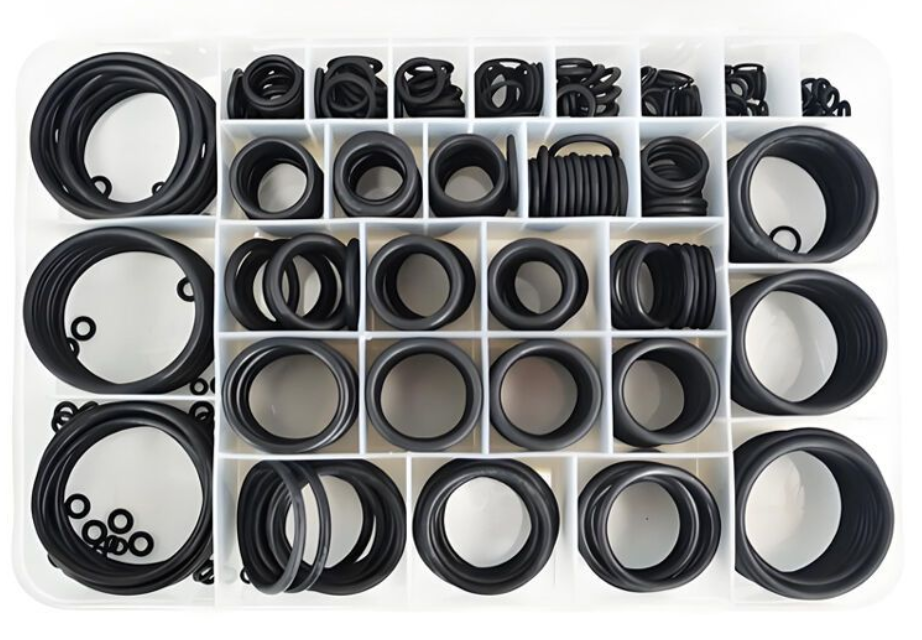
Selecting the correct elastomer for a sealing application begins with understanding the three most commonly specified o ring materials: NBR, FKM, and EPDM. Each offers a distinct combination of chemical compatibility, temperature range, and mechanical properties, and matching these characteristics to the actual service environment is fundamental to achieving long-term, leak-free performance.
A mistaken material choice — even with correct dimensional specification — will result in premature seal failure. Understanding the strengths and limitations of each elastomer family prevents this costly and avoidable error in both new-build and maintenance replacement applications.
NBR — The All-Purpose Workhorse
Nitrile Butadiene Rubber (NBR) is the most widely produced elastomer in O ring manufacturing. Its popularity stems from excellent resistance to petroleum-based oils and fuels, good mechanical strength, abrasion resistance, and temperature capability from -40°C to +120°C. NBR O rings are standard in automotive engine seals, general hydraulic fittings, pneumatic cylinders, and fuel system components worldwide.
Within the NBR family, acrylonitrile (ACN) content determines the balance between oil resistance and cold flexibility. High-ACN grades (40–50%) offer superior oil resistance but reduced low-temperature flexibility; low-ACN grades (18–25%) maintain elasticity at very low temperatures with less oil-swell resistance. Medium-ACN (33–36%) grades provide the most common balance for general-purpose use. NBR is not suitable for ozone-rich environments, outdoor weathering, phosphate ester fluids, or ketones.
FKM — The High-Performance Specialist
Fluorocarbon rubber (FKM / Viton) delivers exceptional chemical and thermal resistance that surpasses all common elastomers in demanding applications. FKM O rings maintain sealing integrity from -20°C to +200°C, withstanding aliphatic and aromatic hydrocarbons, chlorinated solvents, acids, and synthetic hydraulic fluids that rapidly degrade NBR or EPDM. FKM is standard in aerospace hydraulics, automotive fuel injection systems, chemical processing equipment, and high-temperature engine seals. Specialty low-temperature grades extend service to -40°C for cold-climate applications.
EPDM — The Water and Steam Expert
Ethylene Propylene Diene Monomer (EPDM) is the preferred choice for water, steam, dilute acids, and alkaline solutions. Its outstanding ozone and UV resistance also makes EPDM standard for outdoor weathering seals in doors, windows, and roofing. Temperature capability spans -55°C to +150°C in continuous service. A critical limitation: EPDM is completely incompatible with petroleum oils and fuels. Using EPDM in a mineral oil environment causes rapid swelling and catastrophic seal failure — a critical warning to communicate across all maintenance teams working in mixed oil-and-water system environments.
Making the Final Choice
The selection matrix should cover: fluid type and concentration, maximum and minimum operating temperature, pressure level, UV/ozone exposure, and budget. Where multiple fluids are present, the most chemically aggressive must dictate material choice. For food processing or pharmaceutical applications, materials must also comply with FDA or relevant food-contact regulations, favoring specialty silicone or EPDM grades over standard industrial compounds.
Building a material selection reference guide that maps each fluid type and temperature range encountered across your facility's equipment portfolio to the correct O ring elastomer family, and making this guide available to all engineering and maintenance personnel, is a high-value knowledge management investment. Coupling this with a controlled spare parts labelling system that clearly identifies the elastomer material of every O ring in stock eliminates the cross-contamination risk between incompatible materials — one of the most common and costly sources of premature O ring failures in mixed-service industrial maintenance environments where both oil-circuit and water-circuit equipment share the same maintenance stores.