The success of any percutaneous or minimally invasive bone fixation procedure performed with a cannulated screw system depends not only on the quality of the implant but equally on the completeness, calibration accuracy, and ergonomic design of the instrument set used to deliver it. Selecting and standardising on a reliable, comprehensive cannulated screw instrument system is one of the most impactful decisions a surgical department can make for the consistency of its percutaneous fixation outcomes.
Screw Size Range and Diameter Compatibility
Cannulated screw systems are manufactured in multiple diameter families, each suited to different anatomical applications and bone sizes. Small diameter systems — 2.7mm, 3.0mm, and 3.5mm outer diameter — are used for hand, wrist (scaphoid), and small bone applications where tissue disruption must be minimised and precision of placement is paramount. Mid-size systems at 4.5mm, 5.0mm, and 6.5mm cover the core orthopedic applications including femoral neck, ankle, and shoulder. Large diameter systems of 7.3mm and 8.0mm are designed for high-load applications such as tibial plateau, hip, and large metaphyseal fractures where greater bone purchase is required. The instrument set must be specific to the screw diameter in use — guide wires, drill bits, taps, and screwdrivers are not interchangeable across different diameter families.
Guide Wire Quality and Length Selection
The guide wire is the most used and most failure-prone component in any cannulated screw procedure. A guide wire that bends, breaks during screw advancement, or migrates after placement can turn a routine percutaneous procedure into a complex revision. Quality guide wires for orthopedic cannulated screw systems are manufactured from stainless steel or nitinol with a smooth, burr-free surface that prevents tissue damage during insertion and allows the screw to advance smoothly without catching. Threaded or trocar tips provide secure purchase in cortical bone to prevent wire migration during drilling. Length choices of 150mm, 230mm, and 300mm cover the range from paediatric hand procedures through adult femoral neck fixation.
Depth Gauge Design for Accurate Screw Length Selection
Accurate screw length selection is critical in cannulated screw procedures — a screw that is too short provides inadequate fixation, while one that is too long protrudes beyond the far cortex, risks injury to adjacent neurovascular structures, and must be revised. Cannulated depth gauges are designed to travel over the guide wire and hook onto the far cortex to provide a direct measurement of the required screw length. The gauge markings must be clearly legible under operating theatre lighting conditions and provide readings in 2mm increments to match the available screw length intervals. Depth gauges that catch or bind on the guide wire during measurement introduce error that affects screw selection — instrument quality directly determines measurement accuracy.
Screwdriver Ergonomics and Torque Transmission
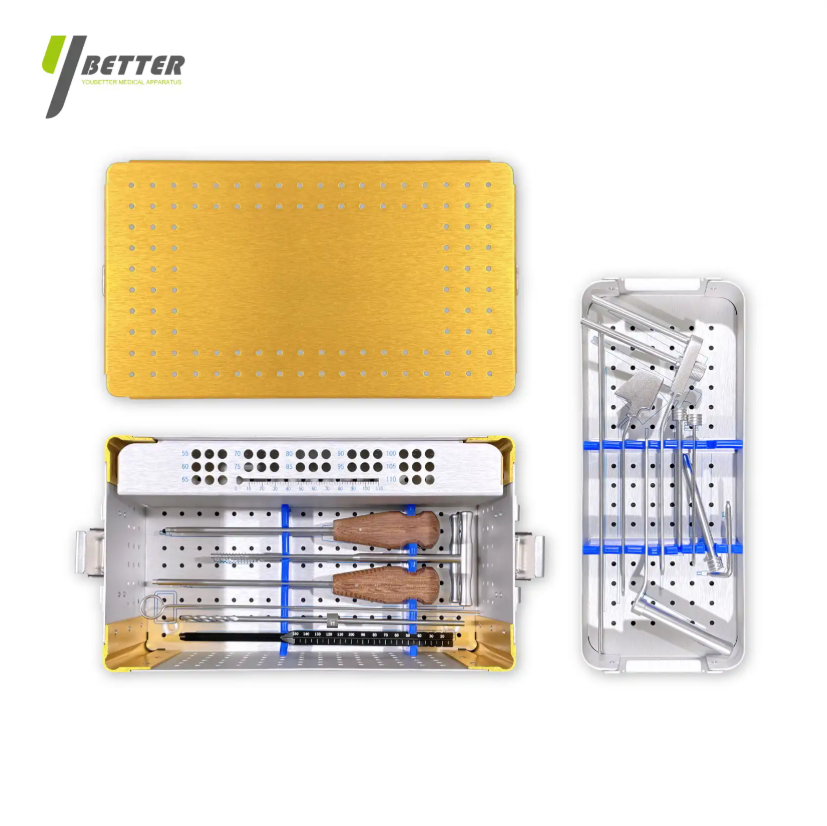
The final screw insertion stroke requires the surgeon to apply controlled rotational torque through the cannulated screwdriver while maintaining axial alignment with the guide wire. Cannulated screwdrivers that transmit torque efficiently without slipping in the screw head drive recess, that provide comfortable grip even through surgical gloves, and that allow the guide wire to pass freely through the screwdriver's central bore without resistance all contribute to a smooth, controlled insertion. Youbetter Medical's cannulated screw instrument sets, including their comprehensive 7.3mm system for large-fragment applications, are designed and manufactured to meet these ergonomic and performance requirements, providing surgical teams with reliable, precision instrument packages for the full range of cannulated screw procedures.